
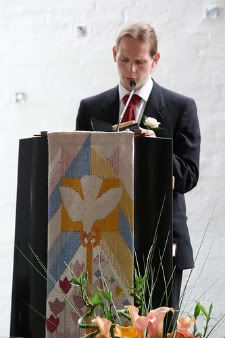
 The central liturgy for catechumens is the first half of the Sunday Eucharist called the Liturgy of the Word. When catechumens are dismissed, they reflect on what they experienced in the Liturgy of the Word and share how their experience connects to their daily life.
One of the United States bishops’ documents on liturgical music says this about the effect of liturgy on faith: “Good celebrations foster and nourish faith. Poor celebrations may weaken and destroy it” (Music in Catholic Worship, 6). If this is true, catechumenate teams need to work closely with their priests, liturgists, lectors, and music directors to help ensure that the principle liturgy of the catechumens will foster and nourish their growing faith.
Use these observation questions to assess the quality of your Liturgies of the Word.
Silence
- Was there an ample amount of silence before and after the First and Second Readings and before and after the Responsorial Psalm?
- Was there silence after the homily?
- Describe the “quality” of the silence, for example, uncomfortable, deep, rushed, peaceful, etc.
Proclamation of the Readings
- Did the lector/deacon/priest proclaim the reading clearly and confidently?
- Did they have good eye contact with the assembly?
- Did they project well, speaking so all could hear?
- Did they convey the emotion and meaning of the reading?
- Describe the pace of their reading. Was it too fast or too slow?
- Describe their posture at the ambo. Did they look attentive? Did they slouch?
- Describe their gestures. Did they do anything distracting?
Procession
- Did the procession during the Gospel Acclamation look like a procession? Did the ministers walk with dignity? Was the Book of the Gospels carried with dignity in the procession?
Homily
- Did the homily relate to the real-life experience, concerns, joys, and fears of the people in the assembly?
- Did the homily connect the people’s lives with the Scriptures proclaimed at that liturgy?
- Did the homily strengthen people’s faith to participate in Eucharist or whatever blessing or sacrament was being celebrated at that liturgy?
Music
- Did the assembly sing the Responsorial Psalm well? Did the assembly seem to know the music? Did the assembly know when to sing? Did the assembly sing confidently?
- Did a cantor lead the Responsorial Psalm from the ambo (where the readings are proclaimed)?
- Were the verses of the Responsorial Psalm sung or chanted by the cantor?
- On a scale of 1 to 5, 1 being poor, 5 being excellent, overall, rate the quality of the musical performance of the Responsorial Psalm by the cantor, choir, and assembly.
- Did the assembly sing the Gospel Acclamation well? Did the assembly seem to know the music? Did the assembly know when to sing? Did the assembly sing confidently?
- Was the verse of the Gospel Acclamation sung or spoken?
- On a scale of 1 to 5, 1 being poor, 5 being excellent, overall, rate the quality of the musical performance of the Gospel Acclamation by the cantor, choir, and assembly.
- If the response of the General Intercessions was sung, did the assembly sing the response well? Did the assembly seem to know the music? Did the assembly know when to sing? Did the assembly sing confidently?
Dismissal of Catechumens
- Did the dismissal take place after the homily, before the Creed?
- Was the dismissal prayerful? Did it feel like the catechumens were being sent for mission, in a similar way the assembly is sent for mission at the end of Mass?
Prayers
- Did the Profession of Faith feel like a “profession” by the whole assembly? Or was it rushed and robotic?
- Did the General Intercessions include prayers for the Church, the world, the needs of the community, the needs of those suffering or oppressed?
- Were the General Intercessions announced by the reader prayerfully and clearly?
Presider
- Did the presider seem confident in leading the prayer of the people? Did the presider engage the assembly in prayer?
Assembly
- During the readings did the assembly “read along” in a missalette, or did they actively listen to the proclamations?
- During the songs did the assembly just listen to the choir, or did they actively sing the responses and acclamations?
- Overall did the assembly participate fully consciously and actively throughout the whole Liturgy of the Word?


